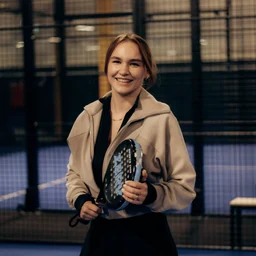
Both padel and tennis are fantastic racket sports for children. Neither is a bad choice. But they are genuinely different games, and those differences matter when you are picking a sport for a 6-year-old versus a 10-year-old, for a shy kid versus a social butterfly, or for a family on a tight budget versus one with flexible leisure spending.
This article runs through the key differences honestly. Tennis is a great sport with a long history and deep coaching infrastructure. Padel is newer, faster-growing, and in several ways better suited to how children actually learn and play. The goal here is to give you the information to make the right call for your child, not to declare a winner.
The Key Differences
On the surface, padel and tennis look similar: rackets, a ball, a net, a court. Once you get into the details, they diverge quite significantly.
Court Size
A padel court is 10m x 20m. A standard tennis court is 10.97m x 23.77m for singles and wider still for doubles. That might sound like a small difference, but for a child, it changes everything. A smaller court means shorter distances to cover, more ball contact per rally, and less time spent chasing down shots that flew past. Children feel more in the game on a padel court from their very first session.
Scoring
Padel uses the same scoring system as tennis: 15, 30, 40, game, set, match. So if a child moves between both sports, the scoring is not a new thing to learn. In practice, padel sets tend to be more compact because the shorter court and wall play produce longer rallies, more points, and more engagement throughout.
The Walls
The single biggest structural difference between the two sports. A padel court is enclosed by glass and metal mesh walls, and the ball can bounce off them legally after it has hit the ground. This changes everything about how the game plays. In tennis, when you hit the ball out, the point is over. In padel, when you hit the ball into the back wall or side wall, the rally often continues. For children, this means fewer frustrating dead points, longer rallies, and far more touches of the ball per game. The walls also act as natural boundaries that keep play moving even when technique is imperfect.
Social Structure
Padel is always played in doubles. There is no singles padel at any official level. Tennis is predominantly a singles sport in club and school settings, with doubles an add-on. For children, this is a meaningful distinction. Padel is inherently a social, team-based experience every single time they play. No child has to stand at one end of a court and face another child alone. They always have a partner.
| Category | Tennis | Padel |
|---|---|---|
| Court size | 23.77m x 10.97m | 20m x 10m (20% smaller) |
| Walls in play | No | Yes — glass + mesh |
| Format | Singles or doubles | Doubles only |
| Scoring | 15/30/40/game | 15/30/40/game (same) |
| Racket type | Strung frame, 27" | Solid perforated paddle, shorter |
| Ball | Standard felt tennis ball | Slightly lower pressure padel ball |
| Average rally length | Short (3–4 shots for beginners) | Longer (walls keep play alive) |
Physical Demands Compared
Both sports develop agility, coordination, and cardiovascular fitness. The physical profiles are different enough to be worth comparing.
Tennis: Power and Explosive Movement
Tennis at even a recreational level demands a wide range of motion and genuine power generation. A proper tennis serve, for example, requires shoulder rotation, trunk rotation, and wrist snap working together. For children under 8 or 9, generating this coordinated power from a full court is genuinely difficult, and many young beginners spend a lot of their lesson time on movement and serve drills before they get to actual match play.
The larger court also means more running. This is great cardiovascular exercise for older children, but can lead to fatigue and frustration for younger ones who spend more time chasing balls than hitting them.
Padel: Agility and Reaction
Padel rewards quick feet and fast reactions over raw power. The solid paddle generates power more easily than a strung racket, so children do not need to develop adult swing mechanics to get the ball moving. Points are often won not by hitting hard but by positioning well, reading the walls, and placing the ball intelligently. These are skills children can genuinely develop from a young age.
The physical demands are still real: padel involves constant side-to-side movement, explosive short sprints, and rotational body mechanics. But the entry point is lower. A child on a padel court is active and engaged from day one rather than spending most of their time fetching misfired tennis serves.
Learning Curve
This is where padel has its clearest advantage for children.
In tennis, a beginner child needs to learn: how to hold a strung racket correctly, how to generate topspin, how to serve (a genuinely technical skill that takes months to develop), and how to cover a large court. The gap between "first lesson" and "fun rally with friends" can be weeks or months of technical drilling.
In padel, a beginner child needs to learn: how to hold a solid paddle (instinctive for most kids), how to hit the ball over the net, and what happens when the ball hits the wall. Most children can sustain a genuine rally with a peer within their first two or three sessions. The walls help: instead of the ball flying out of play, it bounces back off the glass and gives them another chance.
This is not a small thing. Early success is one of the strongest predictors of whether a child sticks with a sport long-term. A child who has fun in their first few sessions is far more likely to want to come back. Padel delivers that early success more reliably than tennis for most children under 10.
Tennis coaching infrastructure is more developed in many countries, and there are excellent red ball / mini tennis programmes designed specifically for young beginners. These shorten the learning curve considerably. But even with these modifications, padel remains more immediately accessible.
Cost Comparison
Equipment
Junior padel rackets are generally less expensive than junior tennis rackets at the same quality level. A solid entry-level junior padel paddle costs between €25 and €60 — for example, the HEAD Monster Kids padel racket at £47.99, or the Babolat Alioth Junior at £76.50. A comparable junior tennis racket runs €35 to €80 — the Wilson Blade Junior is a popular option if your child is trying both sports. At the premium end, both sports can run to €150+, but the entry-level padel option is more accessible. See our guide on choosing a junior padel racket for a full breakdown of what to look for at each price point.
Padel balls last longer than tennis balls in typical beginner use, because the lower-power hitting of children wears them less quickly on a softer court surface. Budget roughly 20-30% less on balls over a season for padel versus tennis.
Lessons
Lesson costs are broadly similar between the two sports at standard club level. Tennis has a larger coaching pool in most countries, so lesson availability is better. Padel coaching is growing fast but can still be harder to find outside major cities. Group junior sessions typically run €10 to €20 per child per hour for either sport.
Court Hire
This is where padel has a structural cost advantage. Padel is always played in doubles, which means court hire is always split four ways. A padel court hire of €20 per hour costs €5 per player. A tennis court hire of €15 per hour in a singles match costs €7.50 per player. Over a season, this adds up.
Many padel clubs also offer better session management for children: group sessions where the court cost is shared across six or eight children with a coach, making the per-child cost very low.
| Cost Category | Tennis | Padel |
|---|---|---|
| Starter racket (junior) | €35 to €80 | €25 to €60 |
| Balls (per can) | €3 to €6 | €3 to €6 |
| Court hire (per hour) | €10 to €20 (split 2 for singles) | €15 to €25 (always split 4) |
| Group lesson (per child) | €10 to €20/hr | €10 to €20/hr |
| Coaching availability | Widely available | Growing fast, patchy outside cities |
Social Benefits of Padel
The doubles-only format of padel is more than a structural quirk. It fundamentally changes how children experience the sport socially.
In tennis, children often train alongside each other but play alone. A singles match is you against one opponent. Wins and losses land entirely on one child. For children who are sensitive to pressure or new to competitive sport, that can be difficult to navigate.
In padel, every game is a shared experience. Wins are celebrated together. Mistakes are absorbed by the pair. A child having an off day has a partner who can cover them. A child who is nervous in competition has someone standing next to them every single point. This structural support makes padel a more emotionally comfortable introduction to competitive sport for many children.
The social dimension extends beyond the court. Because padel requires four players, children tend to arrive and leave with a group. The pre-game and post-game socialising is built into the format in a way that singles tennis simply is not. Many padel clubs report that junior padel sessions develop into genuine friendship groups far more quickly than equivalent tennis programmes. That social energy translates beautifully into celebrations too — see our padel birthday party guide for how to turn a court session into something the kids will talk about for weeks.
Which Sport Suits Which Personality?
There is no universal answer to the padel versus tennis question. Different children suit different sports. Here is a rough guide based on personality and play style.
Padel suits children who...
- Want to play with friends rather than head-to-head
- Get frustrated quickly if they are not rallying
- Are social and enjoy the team dynamic
- Prefer quick bursts of action over long distance running
- Find racket sports tricky but want to keep trying
- Are under 8 and new to racket sports
- Want immediate fun without a long technical learning phase
Tennis suits children who...
- Enjoy individual competition and head-to-head challenges
- Have the patience to develop technique through drilling
- Are natural athletes who pick up movement patterns quickly
- Want to compete in well-established junior leagues and tournaments
- Have a longer attention span for structured coaching
- Are 9 or older and have some racket sport foundation
- Have a parent or sibling already in the tennis world
Neither column is a dealbreaker in either direction. Children can absolutely defy these tendencies. But if the description on the padel side sounds like your child, padel is likely to generate more immediate enthusiasm and a higher chance of long-term participation.
Can They Do Both?
Yes, and there are genuine benefits to doing so. The two sports share enough DNA that skills transfer meaningfully in both directions.
A child who has developed good footwork and court positioning in padel will bring those skills to tennis. The compact swing mechanics of padel can actually help younger children develop better groundstroke control before they progress to full tennis swings. Several professional tennis players have spoken about how padel helped them rediscover touch and feel in their game during injury recovery.
Going the other way, a child with tennis groundstroke technique will find padel easier to pick up. The controlled ball-striking of tennis translates well to padel placement, and tennis players tend to understand court geometry instinctively.
The practical question is time and cost. Running two sports simultaneously is fine for children at a recreational level, but if a child is showing genuine talent and ambition in one, specialisation makes more sense from age 10 or 11 onwards. Until then, playing both is simply more fun and builds a broader athletic foundation.
If your child is showing interest in padel but you want to start small, a mini padel racket is a great way to spark that enthusiasm. Mini rackets are lightweight, fun to hold, and give children something tangible to connect with the sport before they ever set foot on a court. Many parents find that gifting a mini racket turns a vague interest into a genuine request for lessons. If you're shopping for a padel-obsessed dad while you're at it, our padel gifts for dad guide has 15 ideas across every budget.
Frequently Asked Questions
Is padel easier than tennis for kids to learn?
Yes, most children pick up padel faster than tennis. The court is smaller, the paddle is solid with no strings to mishit, the ball bounces more slowly, and the walls mean the ball stays in play longer. Children get more rallies and more enjoyment in their first few sessions, which keeps them coming back.
What age can children start playing padel?
Children can start learning basic padel movements from around age 4 to 5 with a lightweight junior racket. Structured padel sessions on a proper court are suitable from age 6 onwards, when children have enough coordination to follow basic game rules and sustain a short rally. For more detail, see our guide on what age children can start padel.
Is padel or tennis cheaper for kids?
Padel is generally cheaper to start. Junior padel rackets cost less than junior tennis rackets at equivalent quality, balls last longer on a softer court surface, and padel is always played in doubles so court hire is split four ways. Lesson costs are broadly similar, though padel coaching can be harder to find outside larger towns.
Help Your Child Fall in Love with Padel
Start with a mini racket. It is a low-cost way to get children excited about the sport before lessons begin.
Browse Mini Padel Rackets →Published: June 2026. Prices and court hire rates are indicative and vary by location. Always check with local clubs for current fees.